
This article is part of our guide to pitching journalists.
What is ghostwriting for media?
A writer drafts a quote or answer for an expert. The expert reviews it and puts their name to it. Speeches, articles and press quotes have long been produced this way.
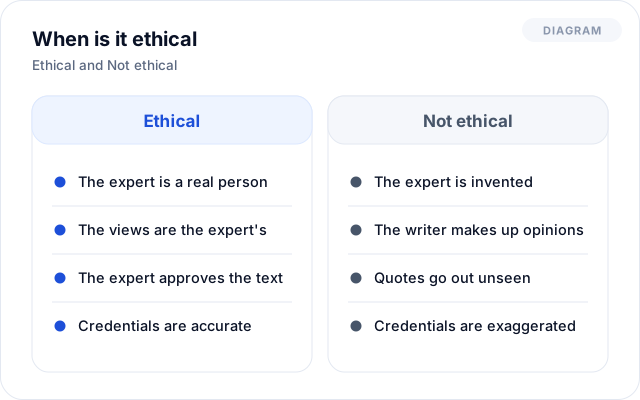
When is it ethical?
| Ethical | Not ethical |
|---|---|
| The expert is a real person | The expert is invented |
| The views are the expert's own | The writer makes up opinions |
| The expert approves the text | Quotes go out unseen |
| Credentials are accurate | Credentials are exaggerated |
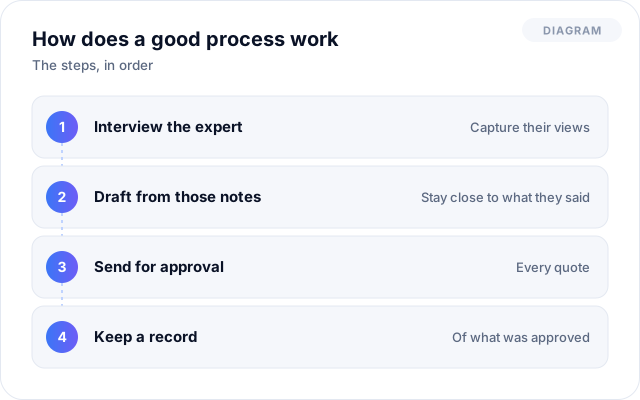
How does a good process work?
- 1
Interview the expert
Capture their views, stories and wording.
- 2
Draft from those notes
Stay close to what they said.
- 3
Send for approval
Every quote, every time at the start.
- 4
Keep a record
Of what was approved.
How do you keep the voice real?
- Use the expert's own phrases
- Keep their level of formality
- Include their real examples
- Avoid polish that makes everyone sound the same
What about regulated fields?
In finance, health and law, the expert must check every statement. They carry the professional responsibility.
This is how our HARO link building service works: we draft, you approve.
What should you read next?
Frequently asked questions
Do journalists mind ghostwritten quotes?
They expect PR support. What they need is a real expert who stands behind the words.
How much time does the expert need to give?
A short briefing at the start, then a few minutes to approve quotes.