This article is part of our list of HARO alternatives.
Why does the profile matter?
A journalist has to trust a source before quoting them. Your profile is where they check that you are real and qualified. On Qwoted they can also search profiles to find experts.
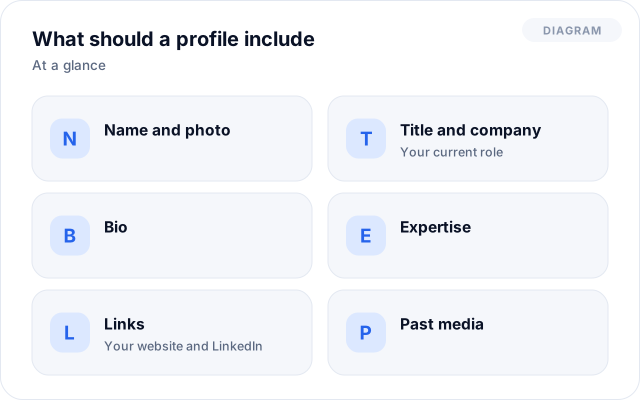
What should a profile include?
| Part | What to write |
|---|---|
| Name and photo | Your real name and a clear headshot |
| Title and company | Your current role |
| Bio | Two or three sentences on your experience |
| Expertise | The specific topics you can comment on |
| Links | Your website and LinkedIn |
| Past media | Articles where you have been quoted |
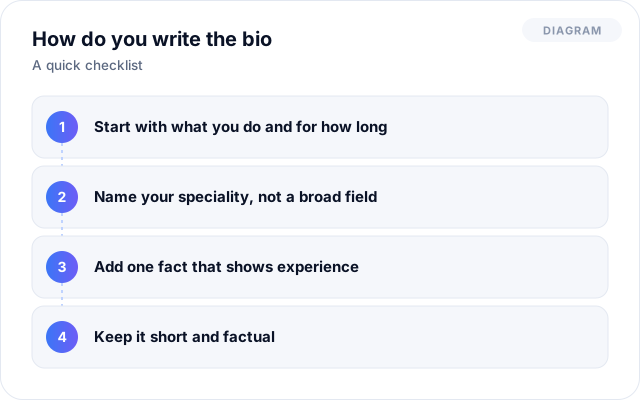
How do you write the bio?
- Start with what you do and for how long
- Name your speciality, not a broad field
- Add one fact that shows experience
- Keep it short and factual
Example: "Maria Lopez is a mortgage broker with 12 years of experience helping first time buyers. She comments on mortgage rates, affordability and the home buying process."
Which topics should you list?
List narrow topics. "Small business tax" is better than "finance". Narrow topics match more precise requests and make you look like a specialist.
What mistakes should you avoid?
- Leaving sections empty
- Writing a sales pitch as your bio
- Listing topics you cannot really speak about
- Using a logo instead of a photo
How do you keep it working?
Update it when your role changes. Add new media mentions as you earn them. Each one makes the next journalist more likely to choose you.
We set up profiles as part of Qwoted link building and our HARO link building service.
What should you read next?
Frequently asked questions
Can a company have a profile?
Journalists quote people. Build the profile around a named expert.
How long does it take to set up?
About an hour to do it properly.