
This article is part of our digital PR guide.
What is reactive PR?
A story breaks. Journalists need experts to explain it. You offer a clear comment while the story is still fresh. This is also called newsjacking.
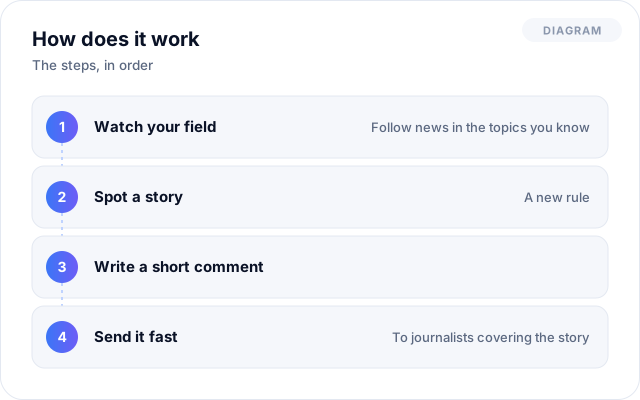
How does it work?
- 1
Watch your field
Follow news in the topics you know.
- 2
Spot a story
A new rule, a report, a price change.
- 3
Write a short comment
What it means and what people should do.
- 4
Send it fast
To journalists covering the story, or in reply to a request.
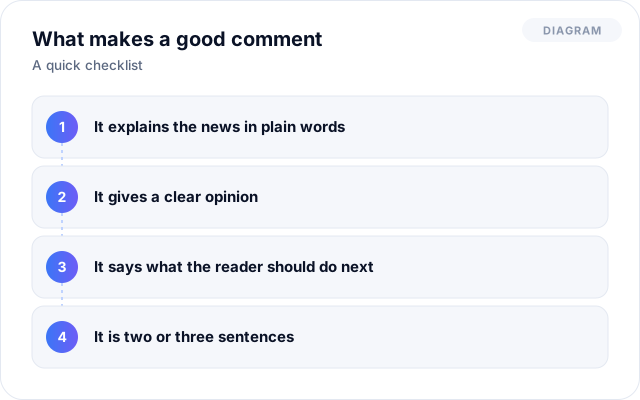
What makes a good comment?
- It explains the news in plain words
- It gives a clear opinion
- It says what the reader should do next
- It is two or three sentences
What should you avoid?
- Commenting on tragedies to promote yourself
- Topics outside your expertise
- Replying days after the story has passed
How do you prepare?
Keep your bio ready and know your position on common topics in your field. Then you can reply within the hour.
Many reactive requests appear on journalist platforms. Our HARO backlinks team watches them daily.
What should you read next?
Frequently asked questions
How fast is fast enough?
Within a few hours of the story breaking.
Do I need media contacts?
They help, but request platforms let you reach journalists without them.