
This article is part of our guide to choosing a HARO service.
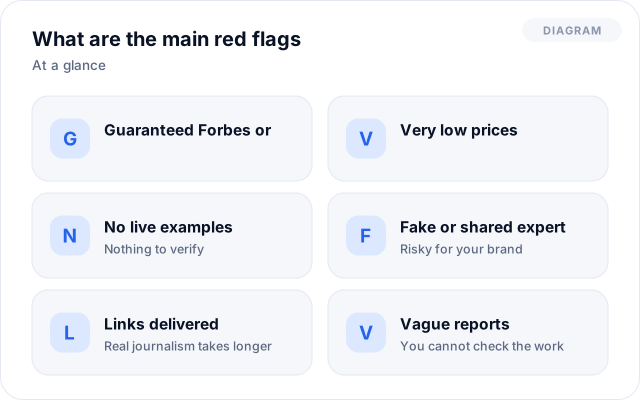
What are the main red flags?
| Red flag | Why it matters |
|---|---|
| Guaranteed Forbes or similar | No one controls what journalists publish |
| Very low prices | Often paid placements on weak sites |
| No live examples | Nothing to verify |
| Fake or shared expert names | Risky for your brand |
| Links delivered within days | Real journalism takes longer |
| Vague reports | You cannot check the work |
What proof should you ask for?
- Links to recent published articles
- The names of the experts quoted
- Which platforms they monitor
- A sample report
- Independent reviews
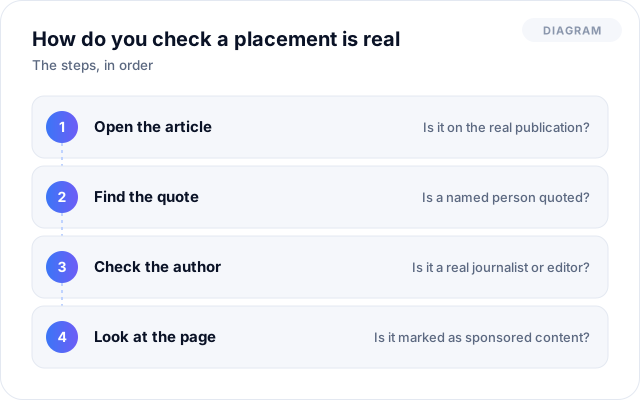
How do you check a placement is real?
- 1
Open the article
Is it on the real publication?
- 2
Find the quote
Is a named person quoted?
- 3
Check the author
Is it a real journalist or editor?
- 4
Look at the page
Is it marked as sponsored content?
What does a good agency do?
- Explains that results depend on journalists
- Guarantees a number of links, not publications
- Lets you approve quotes
- Reports each link with its live URL
How do we compare?
Our homepage lists live placements you can open, with client names. See them in the placements section, and read about our HARO link building agency service.
What should you read next?
Need a wider campaign than journalist outreach alone? Our sister site is a full premium link building service that covers every type of link.
Frequently asked questions
Is a guarantee always a red flag?
No. Guaranteeing a number of links is fair. Guaranteeing a named publication is not credible.
Should I ask for references?
Yes. Public reviews and named clients are good signs.