
This article is part of our guide to editorial links.
Why do big publications use nofollow?
Sites such as Forbes are asked for links constantly. Marking outside links as nofollow is a blanket policy to stop abuse. It says nothing about the quality of the source.
Do search engines ignore nofollow links?
Not entirely. Google has said it treats nofollow as a hint. That means it can choose to consider the link. Nobody outside Google knows how often it does.
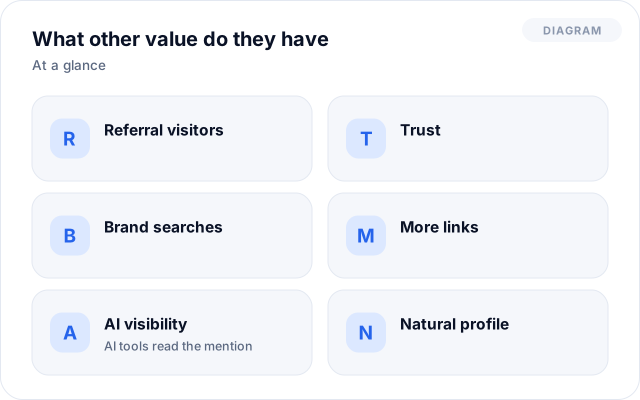
What other value do they have?
| Benefit | Why it matters |
|---|---|
| Referral visitors | Readers click through to your site |
| Trust | You can say you were featured |
| Brand searches | People look you up afterwards |
| More links | Other writers find you and link normally |
| AI visibility | AI tools read the mention |
| Natural profile | A mix of link types looks healthy |
Do they lead to dofollow links?
Often. Writers research their stories in major publications. When they see you quoted there, some will cite you too, and smaller sites usually use normal links.
So should you still want them?
Yes. Turning down a mention in a major publication because of a label would be a mistake. Judge a placement by the publication and its readers.
Our HARO link building service reports whether each link is dofollow or nofollow.
What should you read next?
Frequently asked questions
Is a nofollow Forbes link better than a dofollow link from a small blog?
For brand and trust, usually yes. For direct authority, the dofollow link may count for more. Both are useful.
Can I ask for the nofollow to be removed?
It is set by the publication and is very rarely changed.