
This article is part of our editorial backlinks guide.
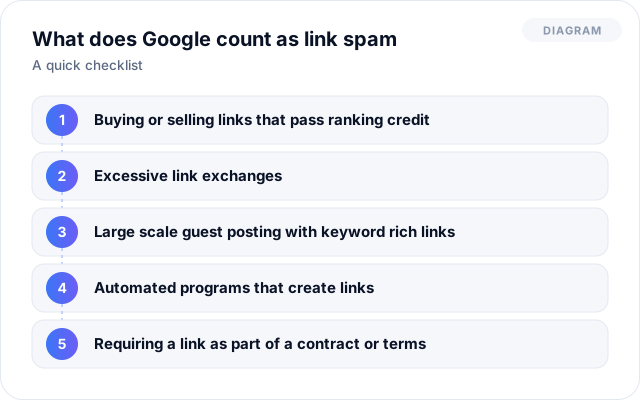
What does Google count as link spam?
- Buying or selling links that pass ranking credit
- Excessive link exchanges
- Large scale guest posting with keyword rich links
- Automated programs that create links
- Requiring a link as part of a contract or terms
This is a summary. Read Google's own spam policies for the full wording.
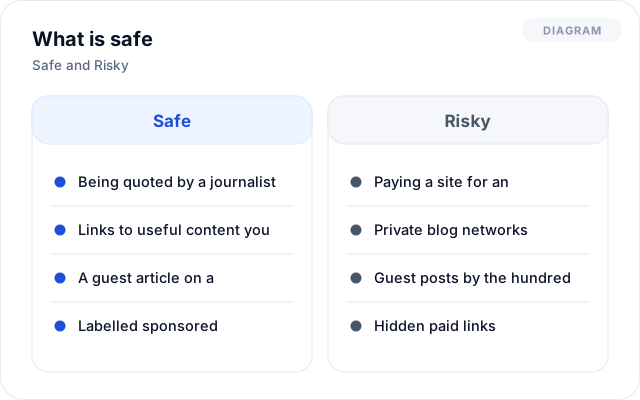
What is safe?
| Safe | Risky |
|---|---|
| Being quoted by a journalist | Paying a site for an unlabelled link |
| Links to useful content you created | Private blog networks |
| A guest article on a relevant site | Guest posts by the hundred |
| Labelled sponsored placements | Hidden paid links |
What happens if you break the rules?
Often the links are simply ignored, so the money is wasted. In worse cases a site can lose rankings. Recovery is slow.
Are paid links ever allowed?
Yes, when they are labelled with the sponsored attribute. Then they are treated as advertising, not as editorial votes.
How do you stay safe?
- Earn links through expertise and useful content
- Keep anchor text natural
- Avoid any offer of bulk links
- Ask providers how each link is obtained
Our HARO link building service is based on earned editorial mentions.
What should you read next?
Frequently asked questions
Is HARO link building against Google's rules?
No. The publication is not paid, and the journalist decides freely.
Should I disavow bad links?
Usually only if you have a manual action or a clear pattern of bought links. See how to audit your backlinks.