
This article is part of our complete guide to editorial backlinks.
What is the simple definition?
A backlink is a link from another website to yours. It is editorial when the other site decided to add it because it helps their readers.
Example: a reporter writes about saving money and quotes a finance expert. The reporter links to the expert's website. That is an editorial backlink.
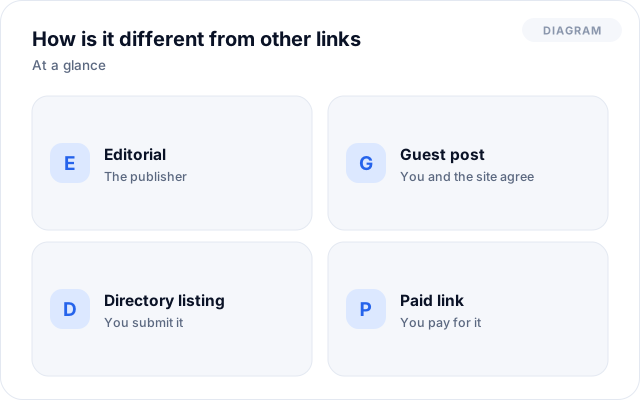
How is it different from other links?
| Type of link | Who decides | Trust level |
|---|---|---|
| Editorial | The publisher | High |
| Guest post | You and the site agree | Medium |
| Directory listing | You submit it | Low |
| Paid link | You pay for it | Risky if not labelled |
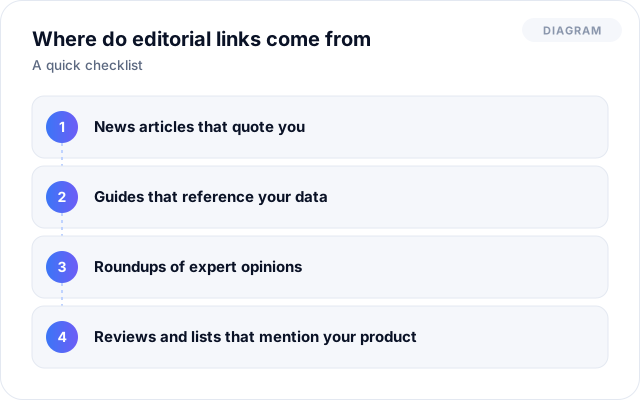
Where do editorial links come from?
- News articles that quote you
- Guides that reference your data
- Roundups of expert opinions
- Reviews and lists that mention your product
Why are they worth more?
They are hard to earn. A real editor has to decide you are worth mentioning. Search engines know this, so they treat these links as a strong vote of trust.
They also bring readers. People who click through are already interested in your topic.
How can a small business earn one?
You do not need a famous brand. You need useful knowledge. Journalists ask for expert input every day.
Answering those requests is the heart of HARO backlinks. A clear, honest answer from a real expert often gets picked.
How do you check your editorial links?
Use a backlink tool to list the sites that link to you. Open the pages. If the link sits inside an article written by someone else, it is likely editorial.
What should you read next?
Frequently asked questions
Is a guest post an editorial backlink?
Not strictly. You arranged the placement, so it is not a free editorial choice.
Can I ask for an editorial link?
You can ask a site that already mentioned you to add a link. You cannot demand one.