
This article is part of our journalist pitching guide.
Why do journalists reject AI pitches?
- They all sound the same
- They contain no real experience
- They sometimes include invented facts
- A journalist cannot trust a quote nobody actually said
Some platforms now act against accounts that send AI-written answers in bulk.
How can a journalist tell?
Generic openings, perfect but empty sentences, and lists of obvious advice are easy to spot. So are several pitches from different people that read almost the same.
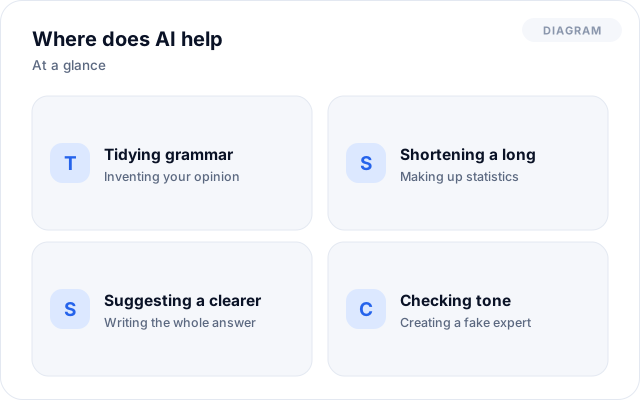
Where does AI help?
| Good use | Bad use |
|---|---|
| Tidying grammar | Inventing your opinion |
| Shortening a long draft | Making up statistics |
| Suggesting a clearer order | Writing the whole answer |
| Checking tone | Creating a fake expert |
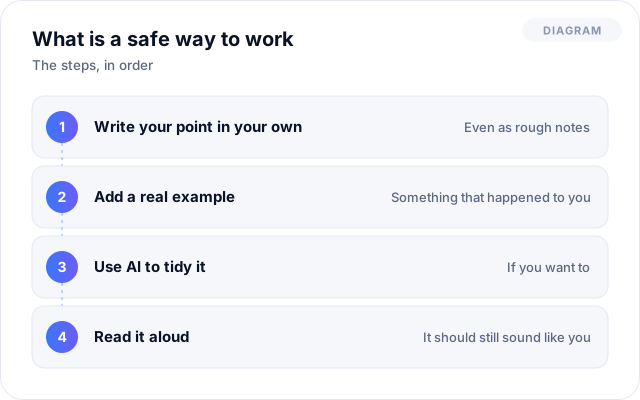
What is a safe way to work?
- 1
Write your point in your own words
Even as rough notes.
- 2
Add a real example
Something that happened to you.
- 3
Use AI to tidy it
If you want to.
- 4
Read it aloud
It should still sound like you.
How do we handle this?
Our pitches are written by people, from what the client tells us. The expert approves each quote. See our HARO link builder service.
What should you read next?
Frequently asked questions
Is it against the rules to use AI?
Rules differ by platform. Sending answers that are entirely AI-written is widely discouraged.
Will AI detection tools catch me?
Journalists do not need a tool. Empty answers are obvious to an experienced reader.