
This article is part of our guide to digital PR.
How do they compare?
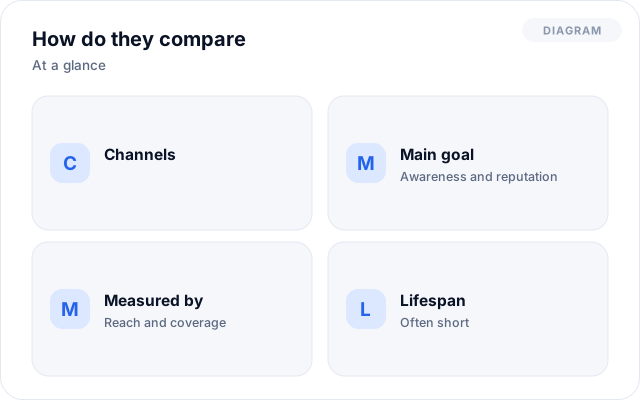
| Traditional PR | Digital PR | |
|---|---|---|
| Channels | Newspapers, magazines, TV, radio | Websites, online news, blogs |
| Main goal | Awareness and reputation | Awareness, links and search visibility |
| Measured by | Reach and coverage | Links, mentions, traffic, rankings |
| Lifespan | Often short | Articles stay online and searchable |
What do they have in common?
- Both rely on journalists choosing to cover you
- Both need a real story or real expertise
- Both build trust that adverts cannot buy
Why is digital PR easier to measure?
An online article has a URL. You can see whether it links to you, how many people clicked and whether your rankings changed afterwards.
Which should you choose?
If your customers find you through search, digital PR usually gives more for the money. Large brands often run both together.
Expert commentary is the simplest form of digital PR. It is what our HARO link building service does.
What should you read next?
Frequently asked questions
Is digital PR replacing traditional PR?
No. Many campaigns combine them.
Do I need a press release?
Not for expert commentary. You answer questions journalists are already asking.