
This article is part of our HARO link building guide.
What happened to HARO?
| When | What happened |
|---|---|
| 2008 | HARO starts as a free email list |
| 2023 to 2024 | HARO is moved to a new platform called Connectively |
| Late 2024 | Connectively is closed |
| 2025 | The HARO name is relaunched by Featured |
For the longer story, read what is HARO.
Is Connectively still running?
No. Connectively was closed at the end of 2024. If you see old guides telling you to sign up there, they are out of date.
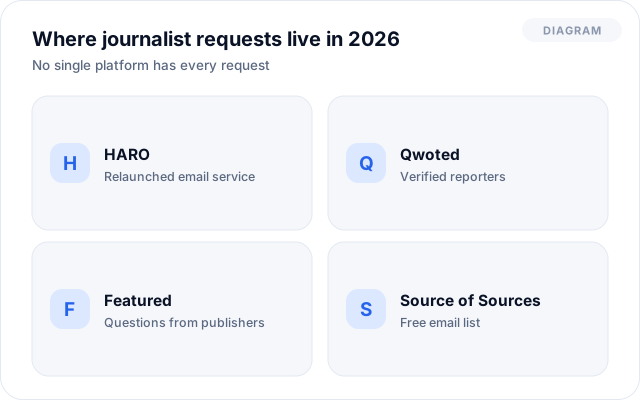
Where do journalists post requests now?
- HARO, relaunched as an email service
- Qwoted, a platform with verified reporters
- Featured, where publishers post questions for experts
- Source of Sources, a free email list
- Help a B2B Writer, for business topics
- Social media, using tags such as journorequest
No single platform has every request. That is the biggest change since the old HARO days.
What does this mean for link building?
The method still works. Journalists still need experts, and they still link to good sources.
What changed is the workload. You now need to watch several places every day. This is one reason many companies use a HARO link building service instead of doing it alone.
Why did so many people think HARO was dead?
For most of a decade, HARO meant one thing: emails in your inbox three times a day. When those emails stopped and the service moved to a new platform, many users lost track of it.
Then that platform closed. For several months there was no HARO at all. Articles announcing "the end of HARO" spread widely, and many of them are still online. That is why the question keeps being asked.
How is the new HARO different from the old one?
| Classic HARO | HARO today | |
|---|---|---|
| Owner | Cision | New ownership since 2025 |
| Format | Email list | Email list again |
| Competition | It was the main service | One of several services |
| Spam controls | Limited | Stricter rules on low quality replies |
The core idea has not changed. What changed is the market around it. HARO is now one option among several, not the only one.
How do journalists feel about these platforms now?
Many journalists became frustrated with the old HARO. They were flooded with replies that were off topic, copied or written by software.
That frustration shapes how they work today. They are quicker to ignore weak replies and more likely to check who a source really is. For genuine experts this is good news. There is less noise to compete with when your answer is clearly real.
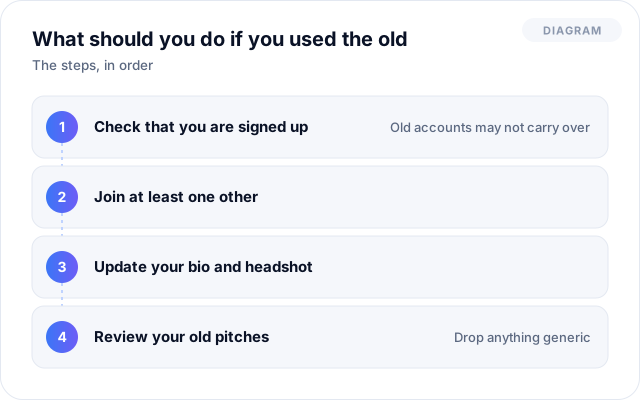
What should you do if you used the old HARO?
- 1
Check that you are signed up to the current service
Old accounts may not carry over.
- 2
Join at least one other platform
Qwoted or Featured are good choices.
- 3
Update your bio and headshot
Profiles matter more than they used to.
- 4
Review your old pitches
Drop anything generic.
If you stopped pitching when HARO closed, this is a good moment to start again. Many competitors gave up and never returned.
Which platform should be your priority in 2026?
There is no single best choice. It depends on your field.
- For business, finance and technology, Qwoted is strong
- For quick wins in expert roundups, Featured is the easiest start
- For a wide mix of topics, HARO and Source of Sources
- For software and B2B, Help a B2B Writer
Read our reviews of Qwoted and Featured.com before you decide.
Is the opportunity bigger or smaller than before?
In one way it is harder. You need to watch more places. In another way it is better. Fewer people are willing to do that work, so those who do face less competition on each request.
The demand from journalists has not fallen. They still need experts every day. The businesses that keep showing up with useful answers are the ones that earn the links.
How can you check that a HARO service is genuine?
- Search for the official site rather than clicking a link in an email
- Look for clear terms and a privacy policy
- Check that you are asked to join as a source, with no payment for requests
- Be wary of sites that promise guaranteed placements
If something feels off, close the page and search again. A real platform does not need to pressure you.
What are the risks of relying on one platform?
The closure of Connectively showed how quickly a platform can disappear. Users who depended on it had nothing to fall back on.
- Journalists can move without warning
- Rules and prices can change overnight
- A single account can be limited or removed
- A platform can close entirely
Spreading your effort across two or three services protects you from all of these.
What should you do this week?
- 1
Confirm your HARO signup
Use the official site.
- 2
Join Qwoted or Featured
Pick the one that fits your field.
- 3
Update your bio
Short and factual.
- 4
Answer one request
Make it a good one.
Our guide to HARO alternatives helps you choose.
Is it still worth doing in 2026?
Yes. Earned links from real publications are as valuable as ever. They may matter more now, because AI search tools also rely on trusted sources.
The people who lose out are those who send generic answers. Specific, expert replies still get picked.
What should you read next?
Frequently asked questions
Is HARO free to use?
Plans can change. Check the official HARO site for current details before you sign up.
Do I need to use every platform?
You do not have to, but each one you skip means missed requests. Start with two or three.
Do I need to sign up again?
Check the official HARO site. Do not assume an old account still works.
Are HARO links still valuable?
Yes. Earned links from real publications are as valuable as ever.
How many platforms should I use?
Start with two or three. Add more once you have a routine.